Use fictional or de-identified examples only.
Never enter PII or PHI into this site, copied prompts, practice exercises, or an unapproved AI or chat tool.
PRP practitioner field guide
You do not need to know what to search for. Tell us what is happening in your session and open the exact guide you need.
Choose what you need ↓No prior training needed
Choose the sentence that sounds most like your situation.
First-day walkthrough
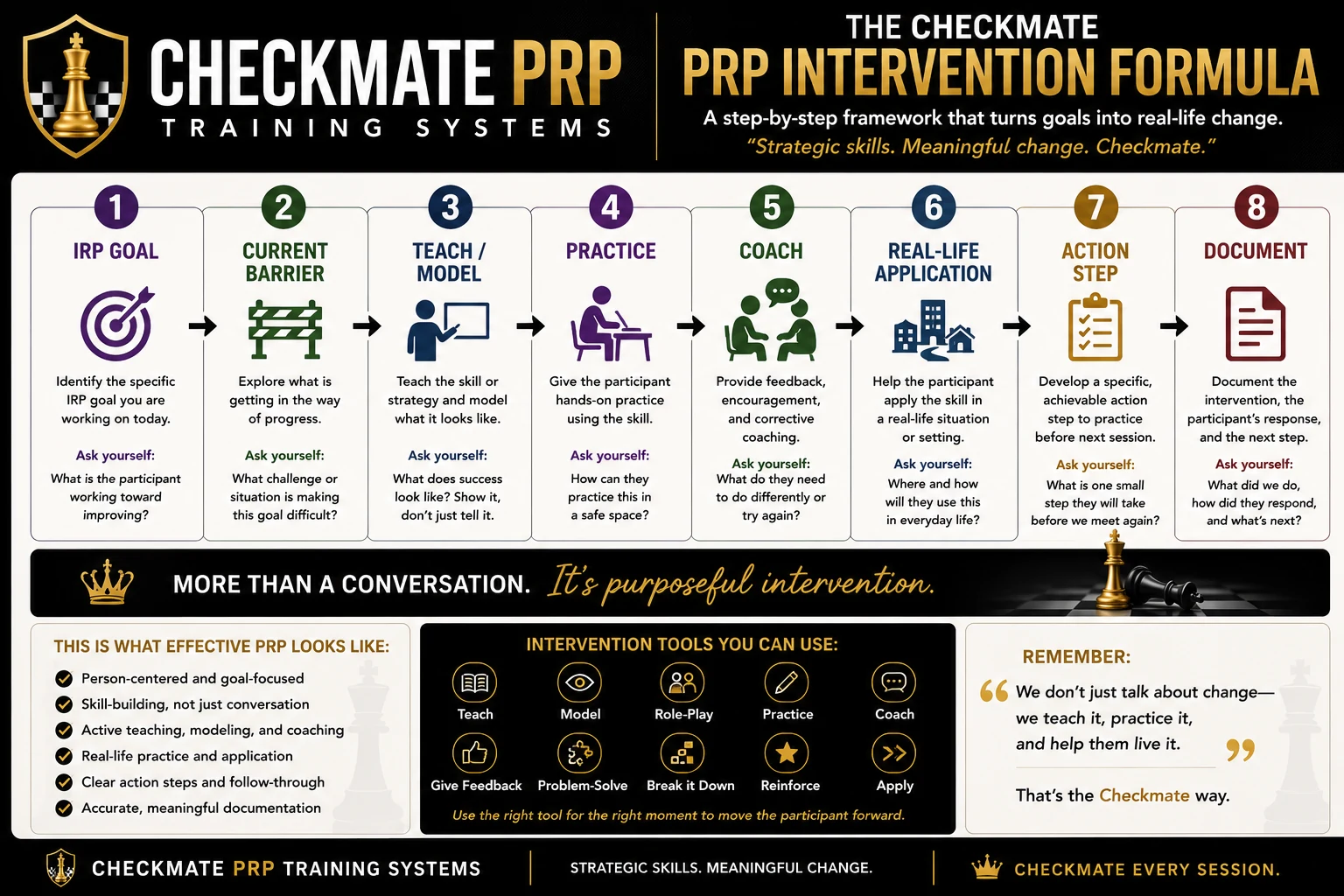
Do not worry about memorizing everything. Keep the formula open and move one step at a time.
What functional skill is the participant working toward?
What is getting in the way right now?
Show the participant exactly what the skill looks like.
Let the participant try. Prompt, redirect, and rehearse.
Connect practice to a real home, work, school, or community situation.
Record your intervention, the observable participant response, and one brief participant quote when appropriate.
Privacy & confidentiality checkpoint
Protect participant information in every note, training example, message, and exchange.
Never enter PII or PHI into this site, copied prompts, practice exercises, or an unapproved AI or chat tool.
Include required facts and identifiers only as agency policy requires. Keep the note relevant, accurate, and limited to the service.
Verify the recipient and authorization, then share only what is needed. Follow added consent rules when 42 CFR Part 2 or state law applies.
Original infographic library
Each card uses the actual graphic created in your original training conversation. Open it full-size or download it.
Use this when: Use this first. It shows the complete path from IRP goal to documentation.
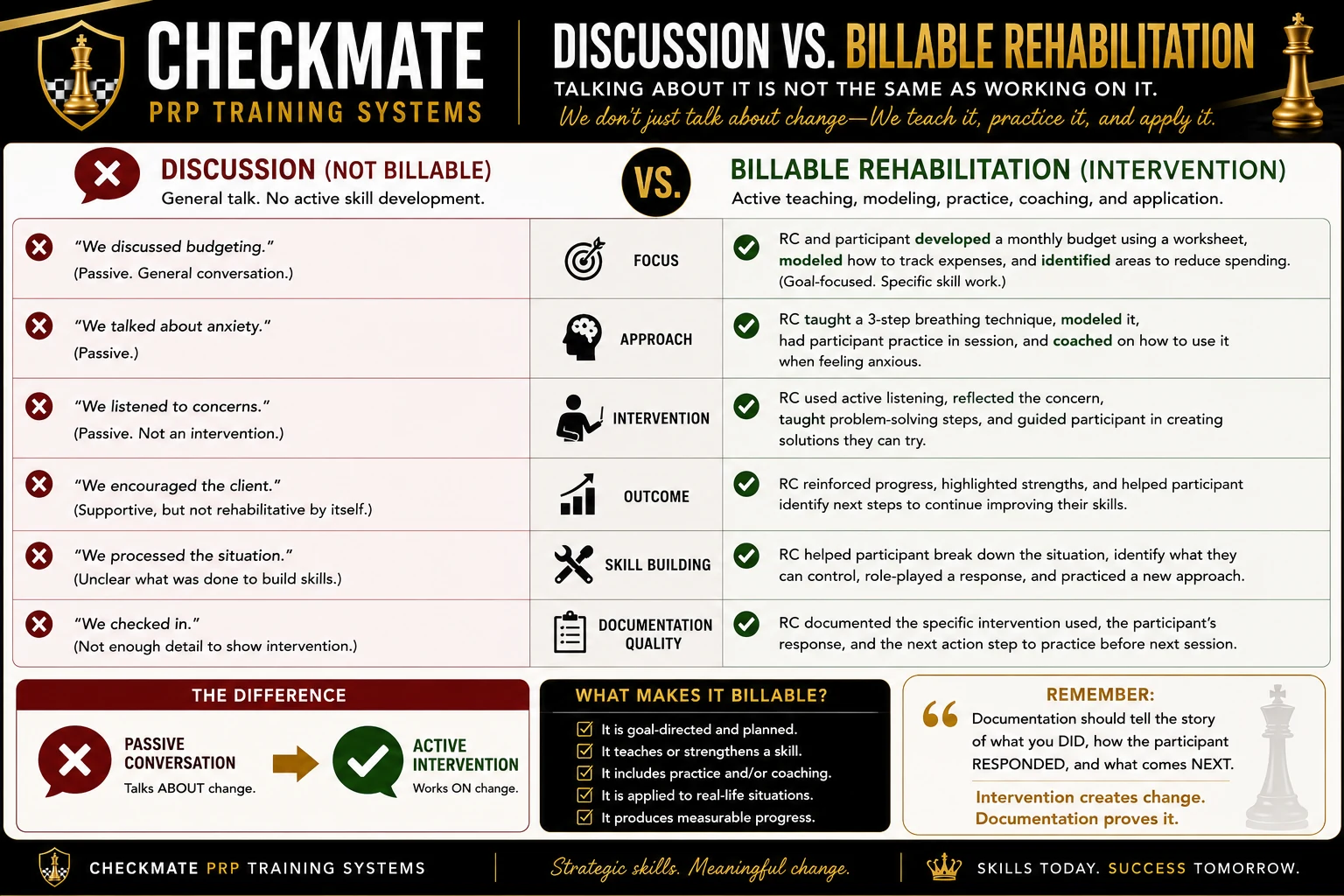
Use this when: Use when a session feels like it is only conversation.
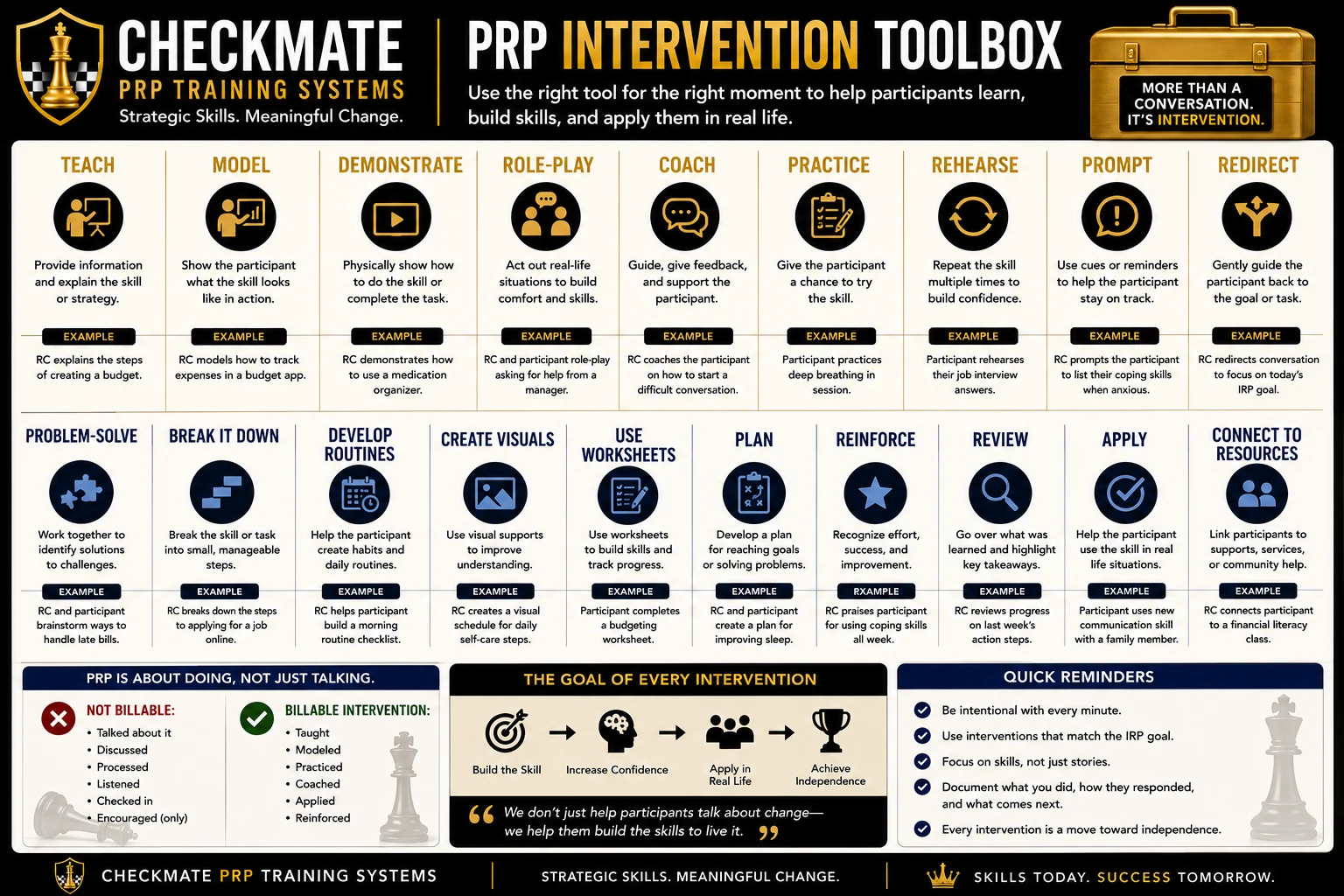
Use this when: Use when you need an active move such as teach, model, role-play, or coach.
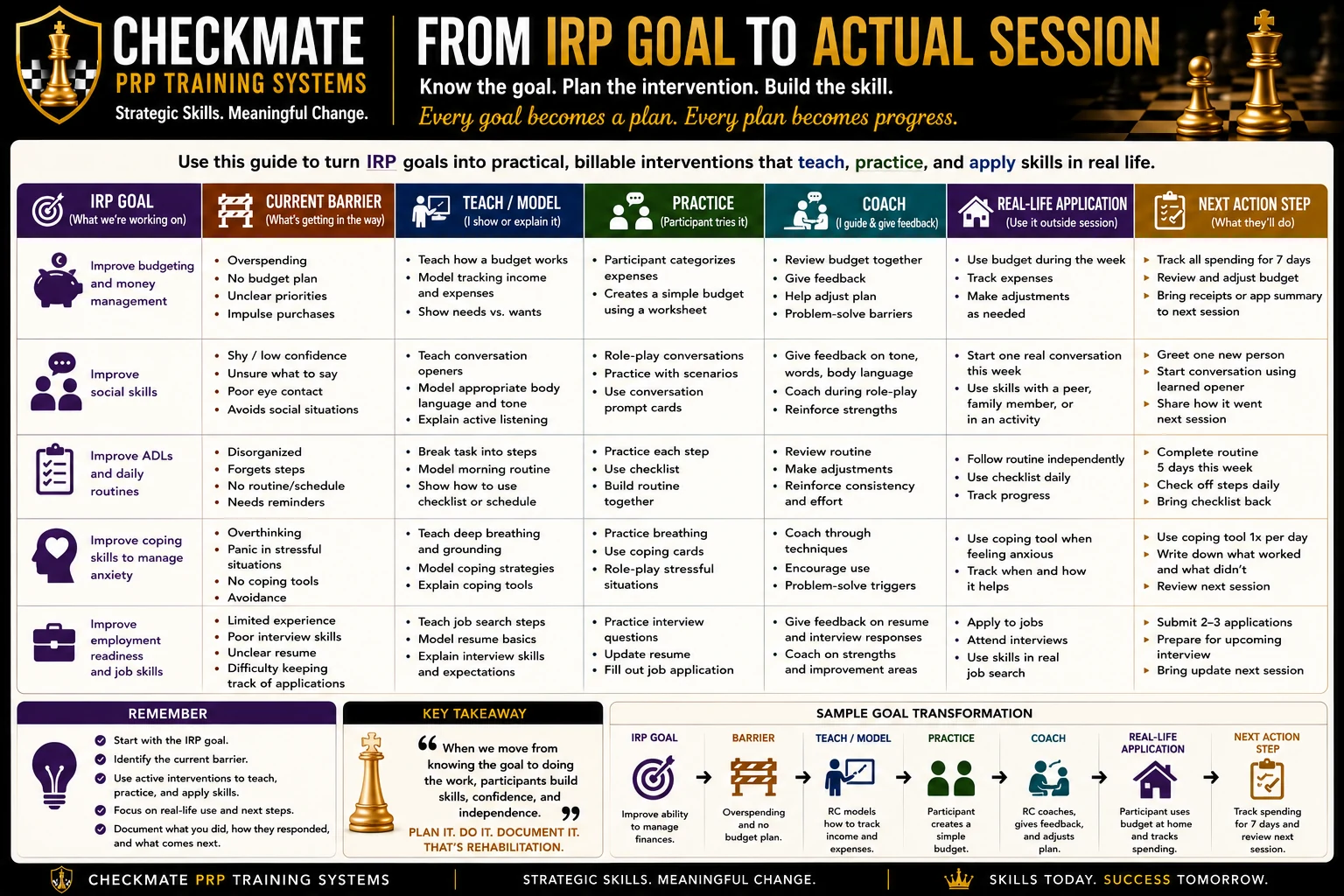
Use this when: Use when you know the goal but do not know what activity to do.
Use this when: Use for a fast menu of practical skill-building techniques.
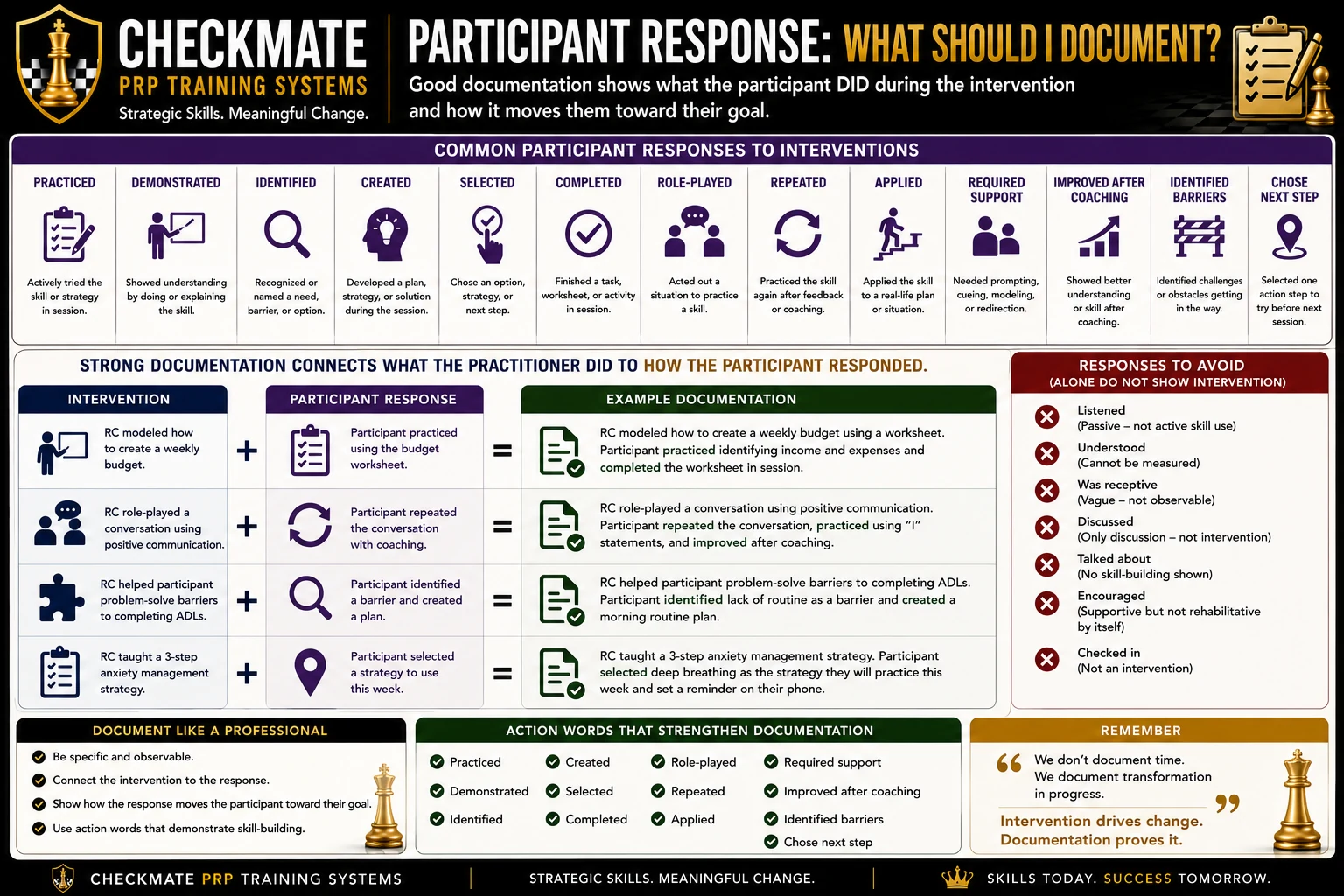
Use this when: Use to describe what the participant actually did, demonstrated, or needed.
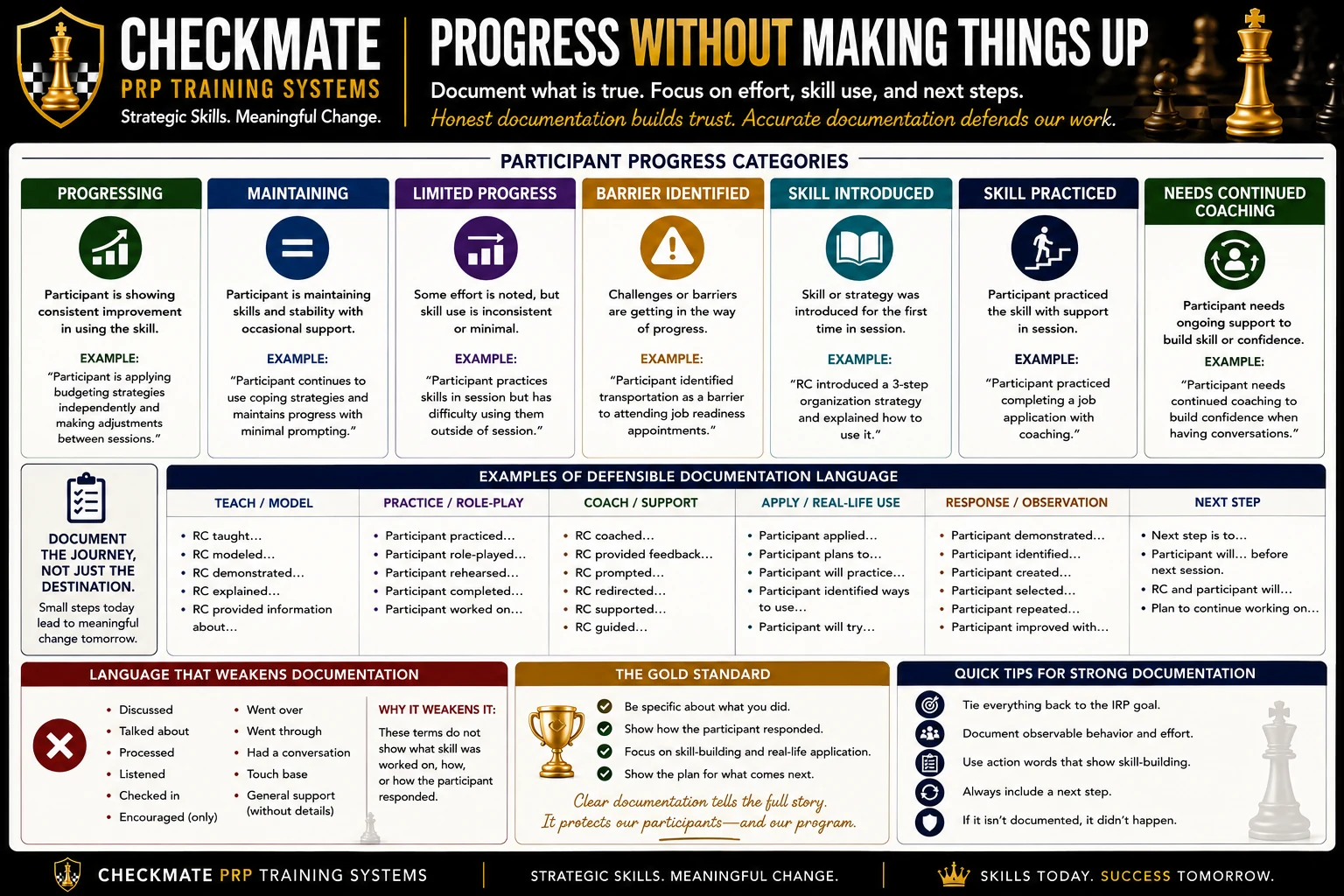
Use this when: Use when you need accurate progress language without overstating improvement.
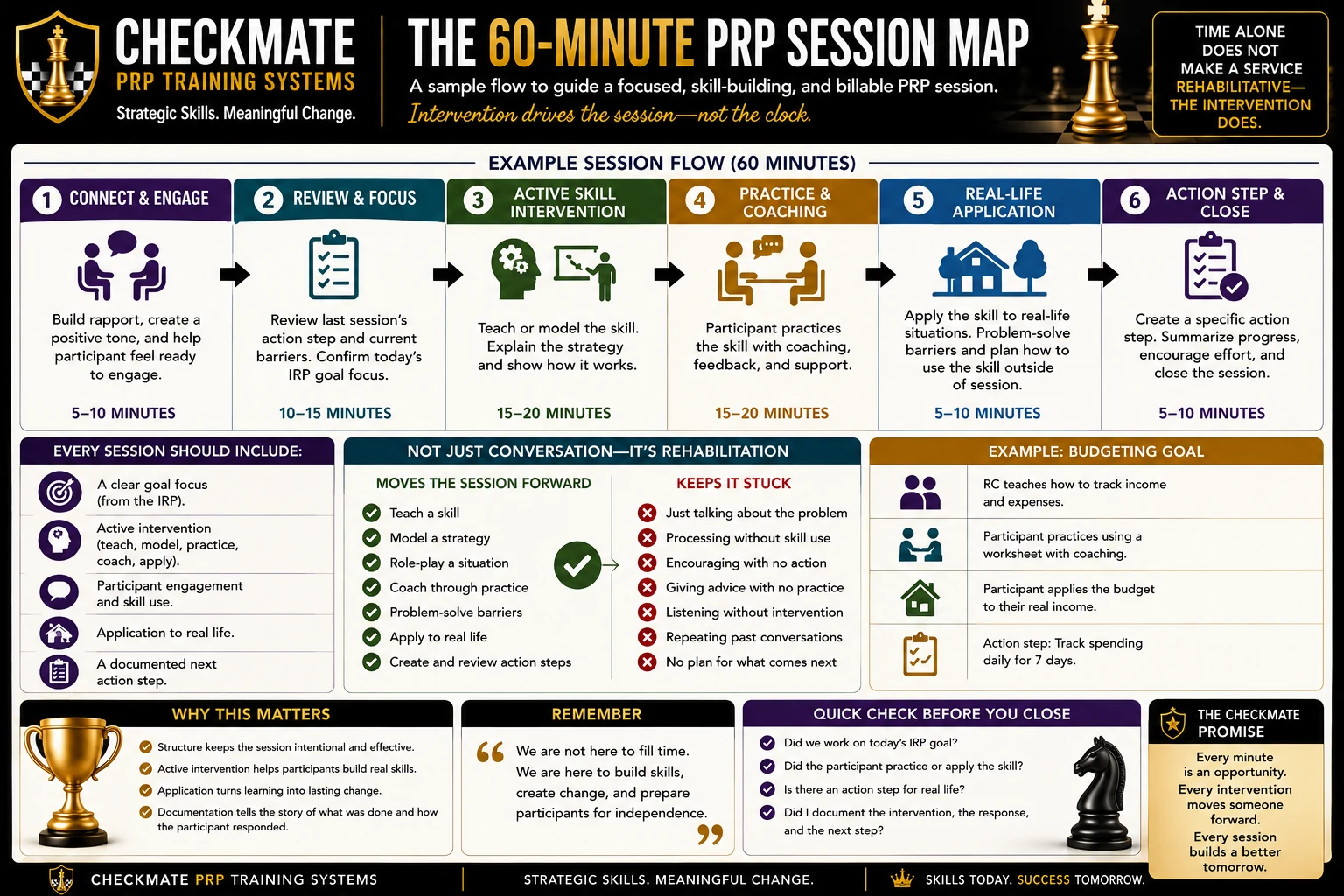
Use this when: Use to plan a full session with enough time for practice and application.
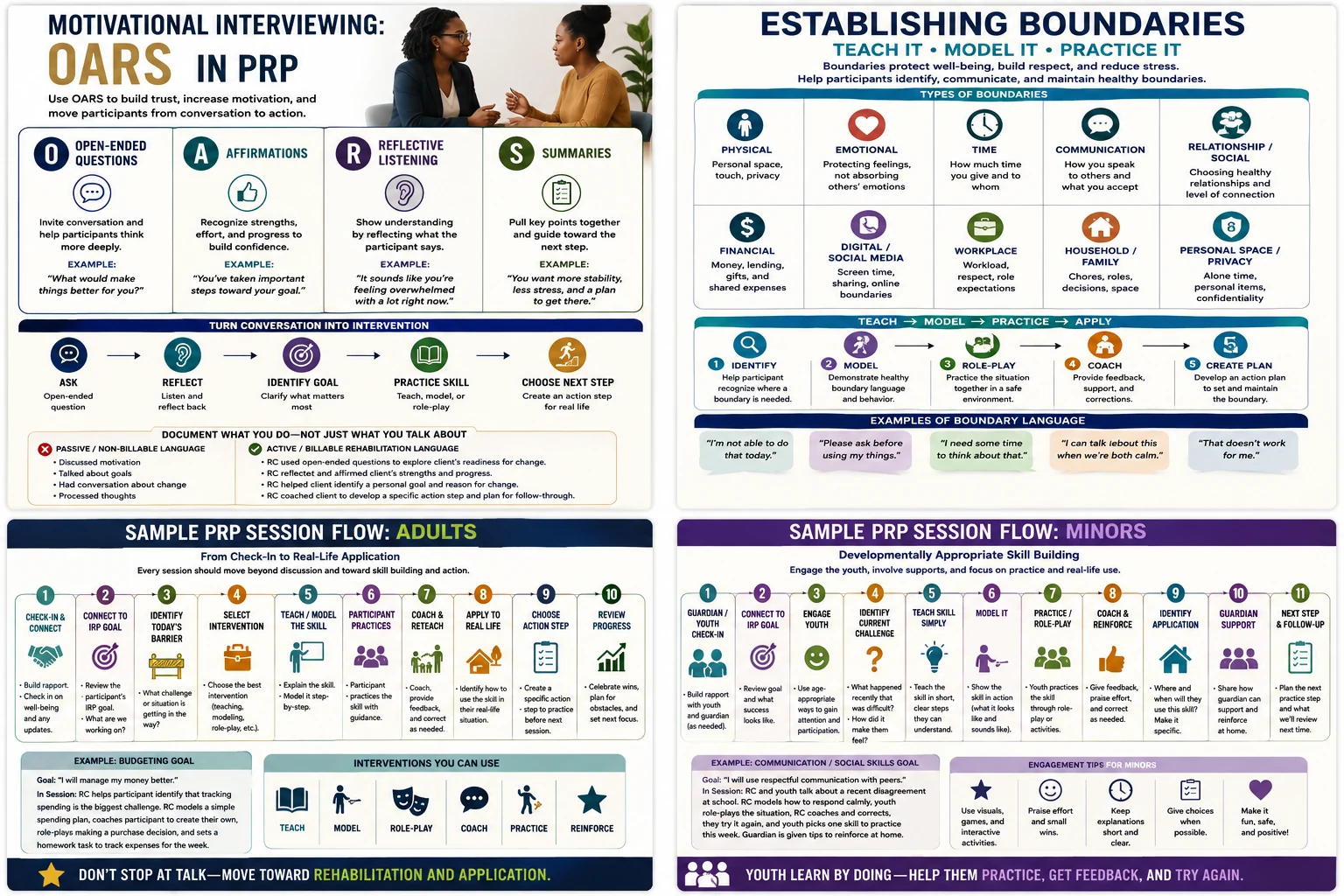
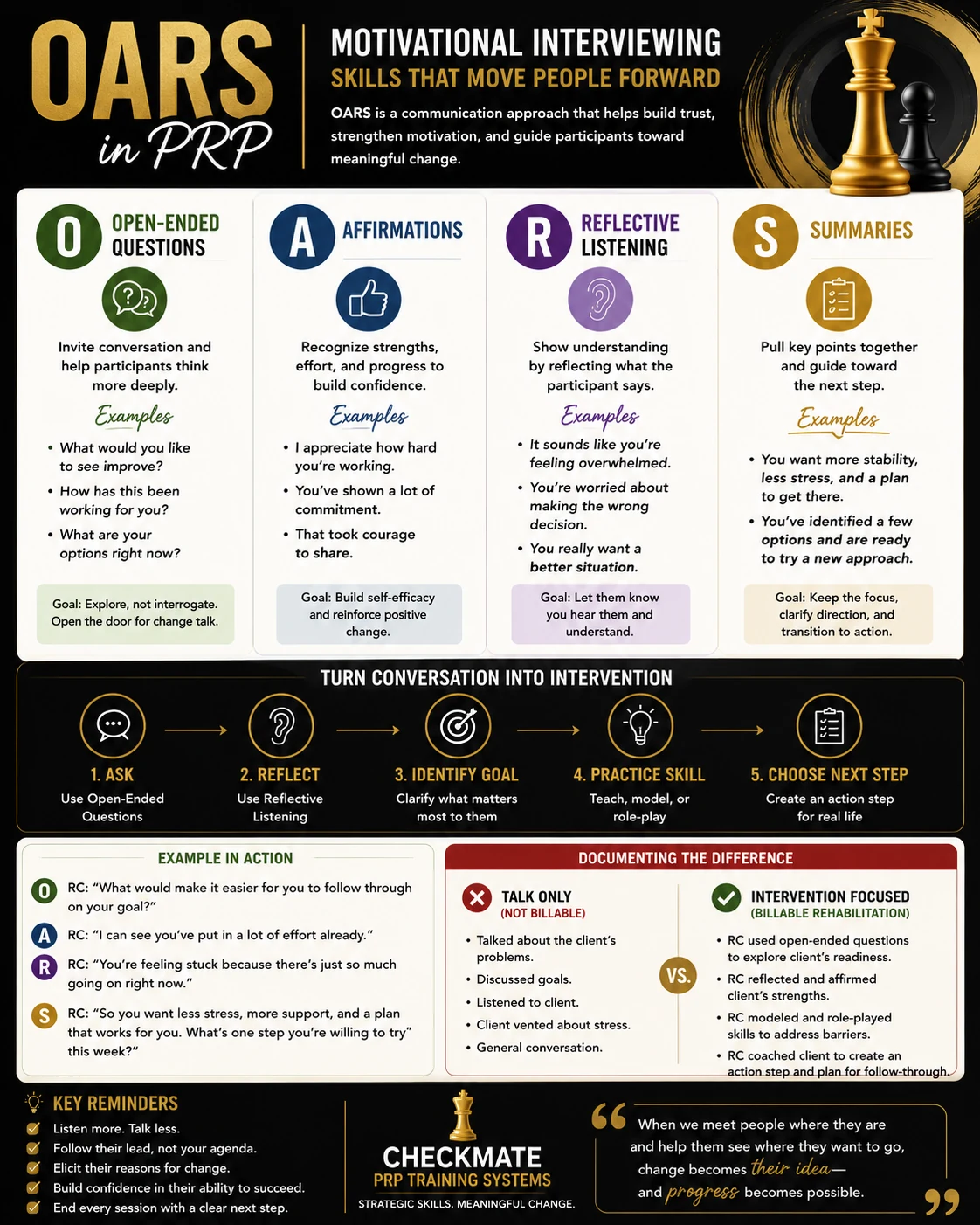
Use this when: Use when you need to engage the participant and move conversation toward action.
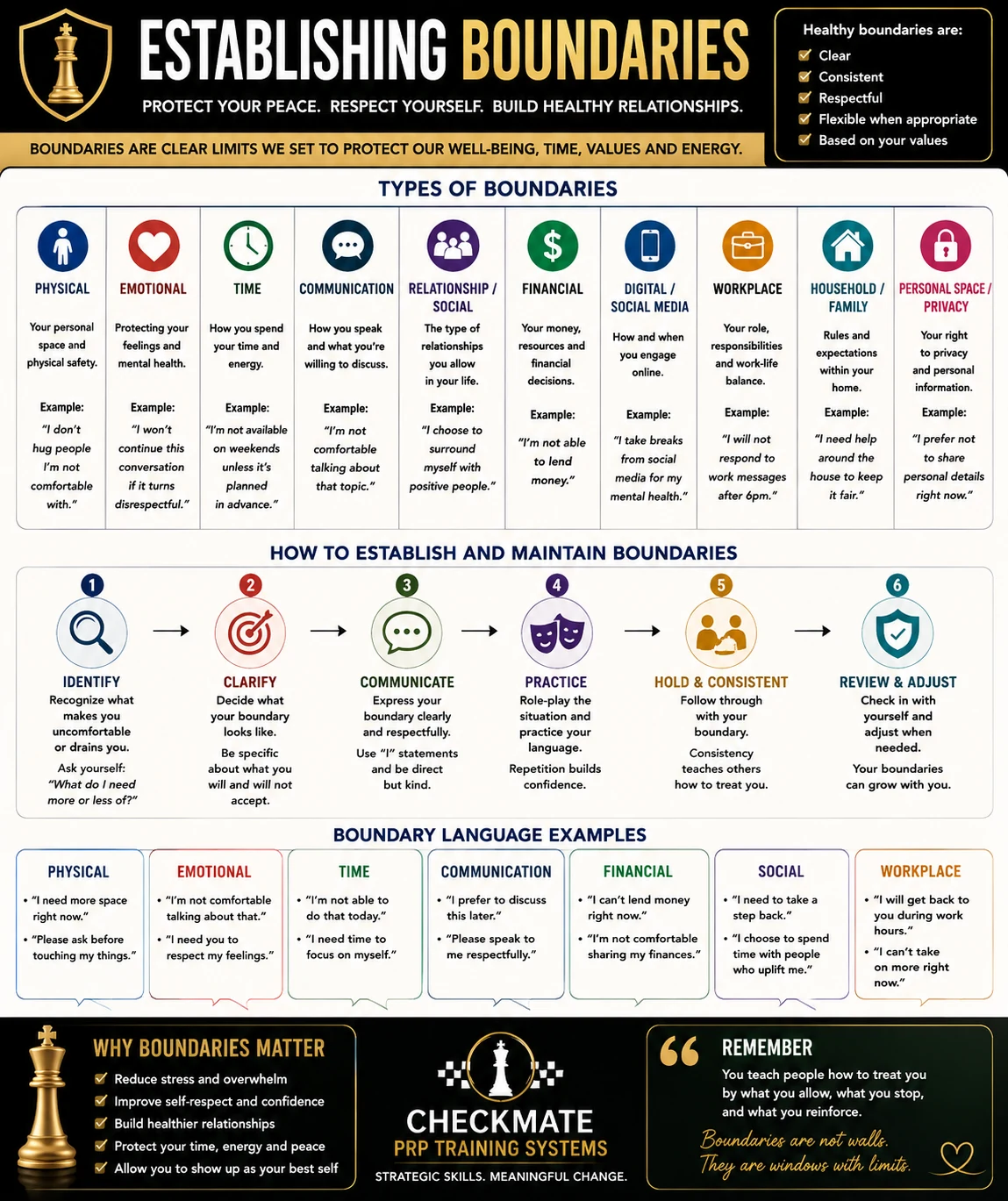
Use this when: Use to teach, model, and role-play clear boundary language.
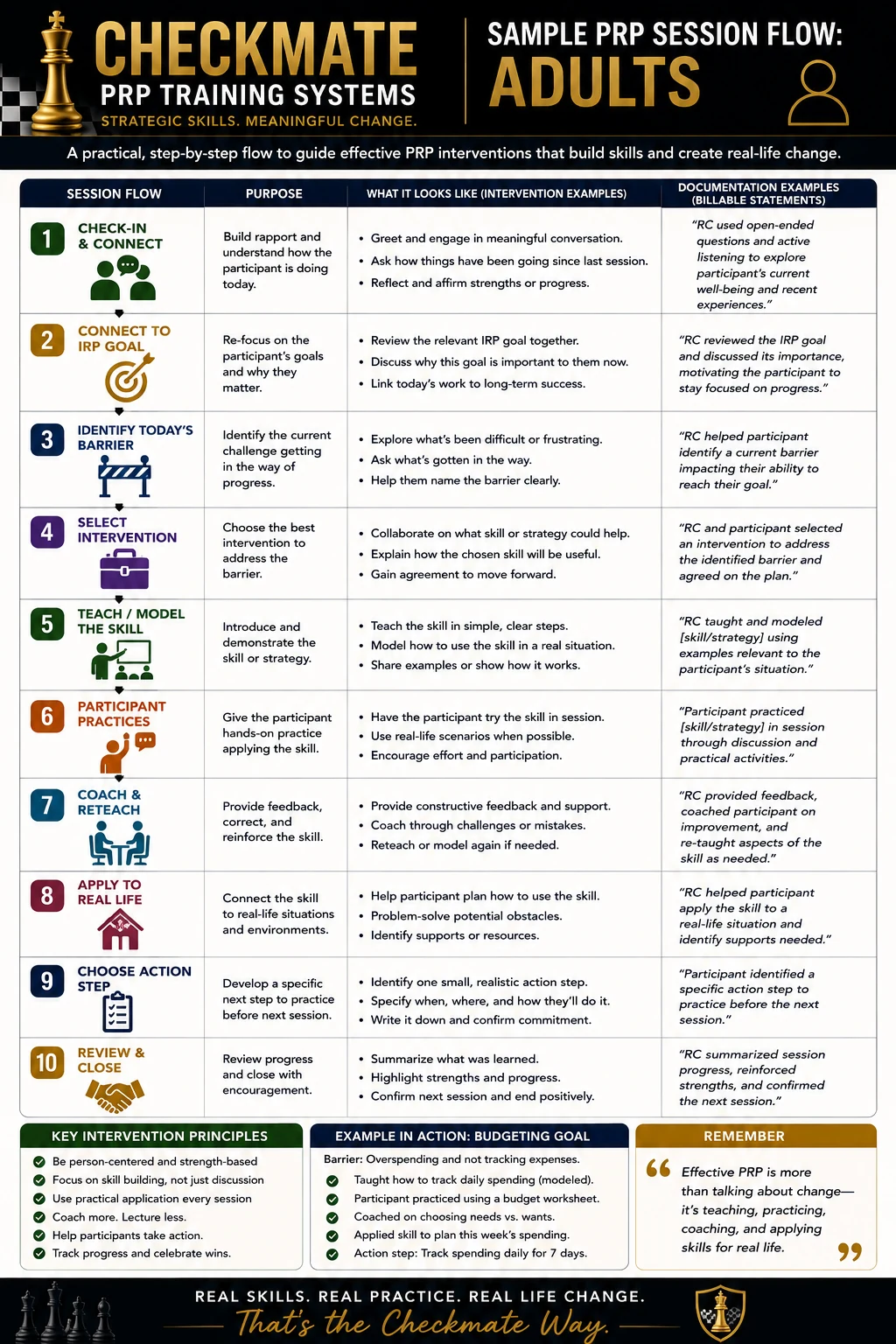
Use this when: Use as a step-by-step guide for an adult PRP session.
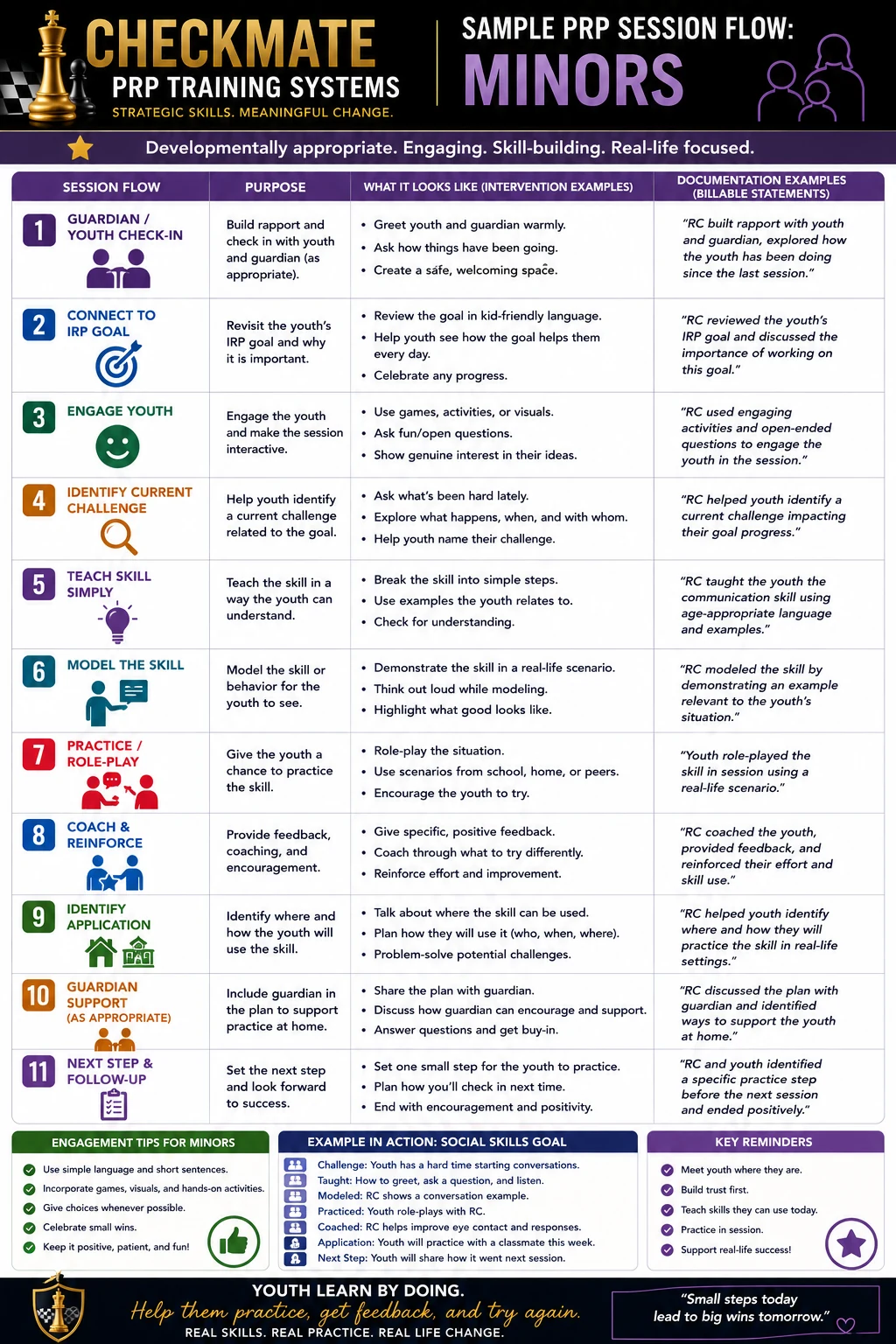
Use this when: Use for developmentally appropriate youth practice and guardian reinforcement.
SAMHSA wellness: eight interconnected dimensions
No domain is first or more important. The cards are listed alphabetically so staff can find them consistently.
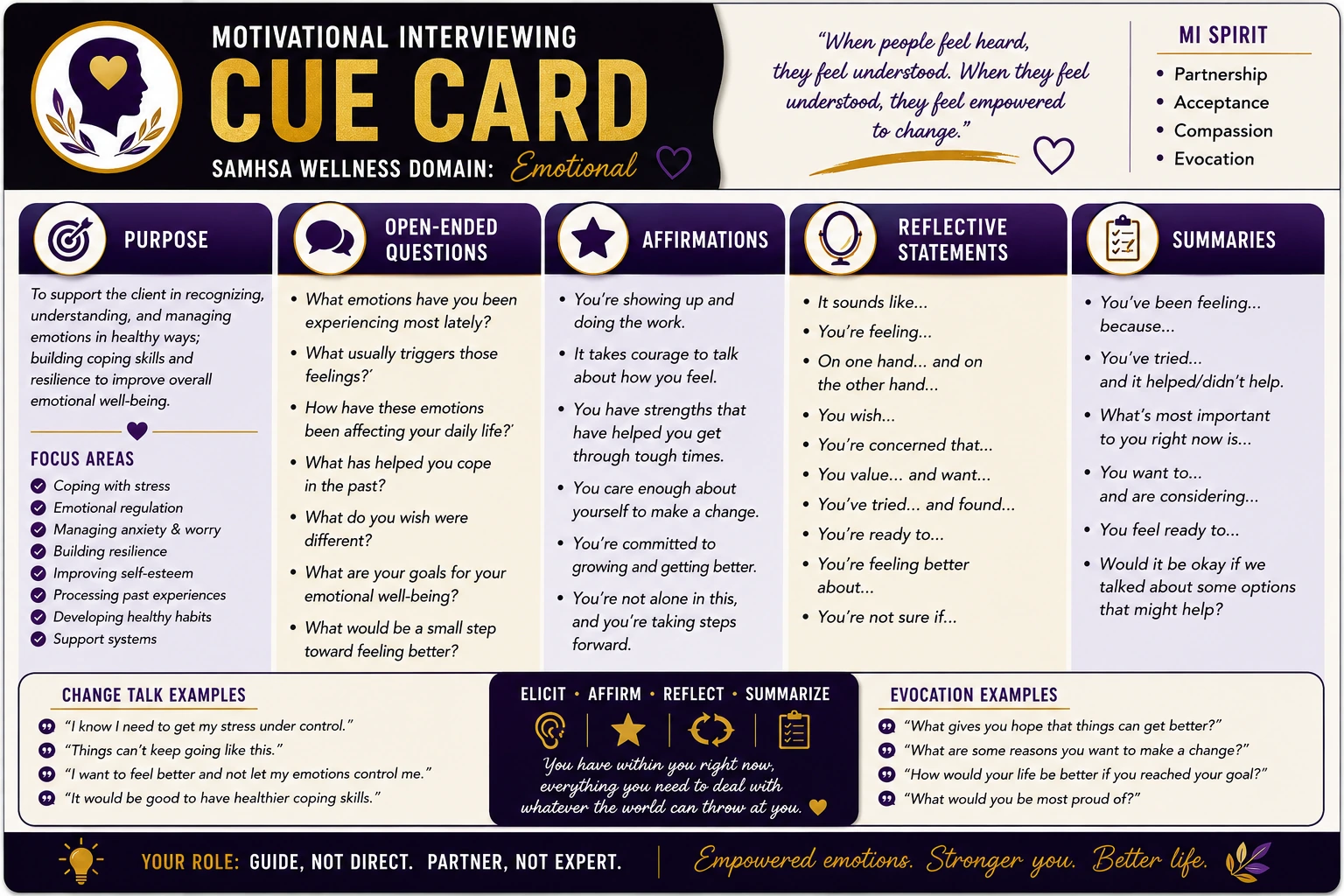
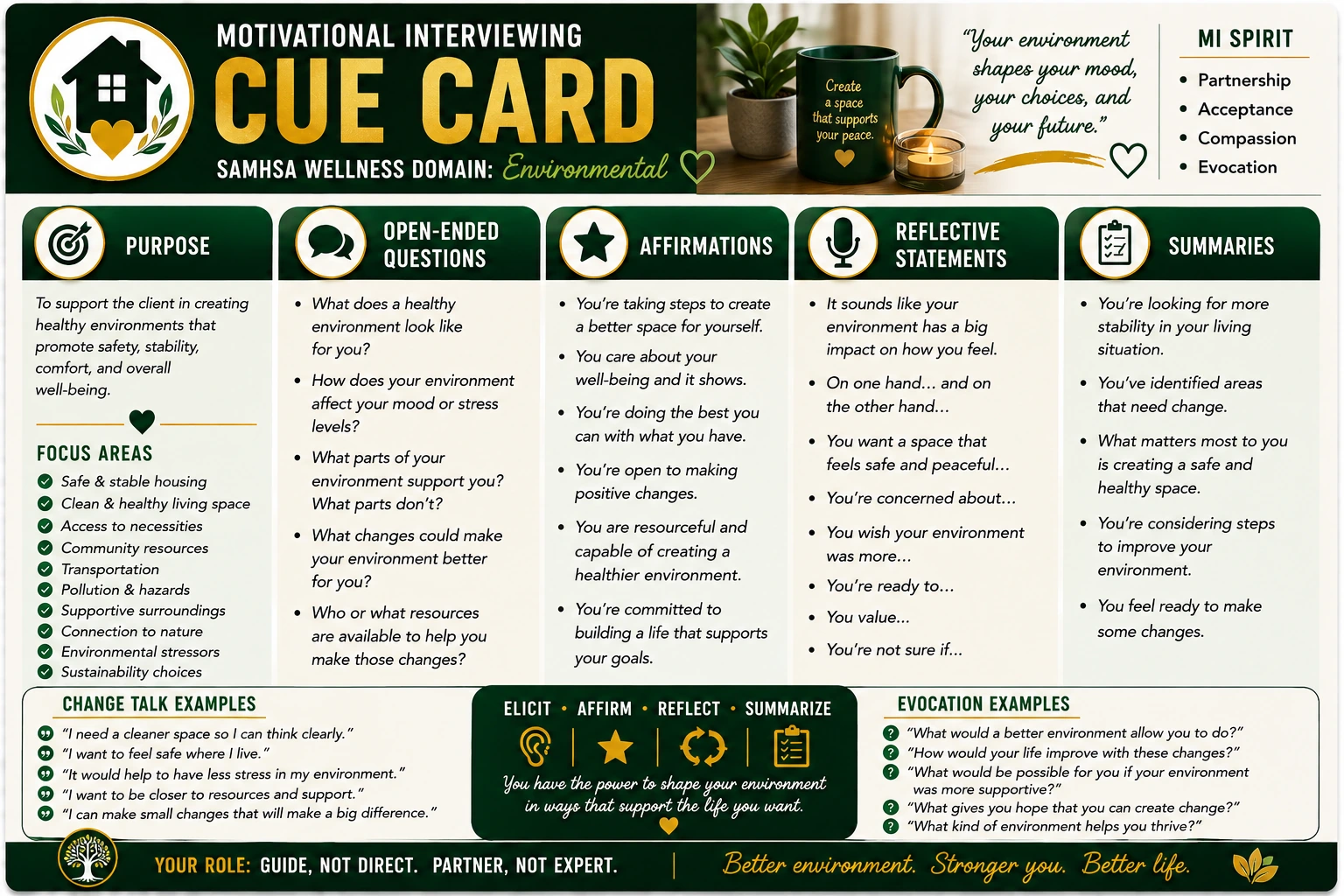
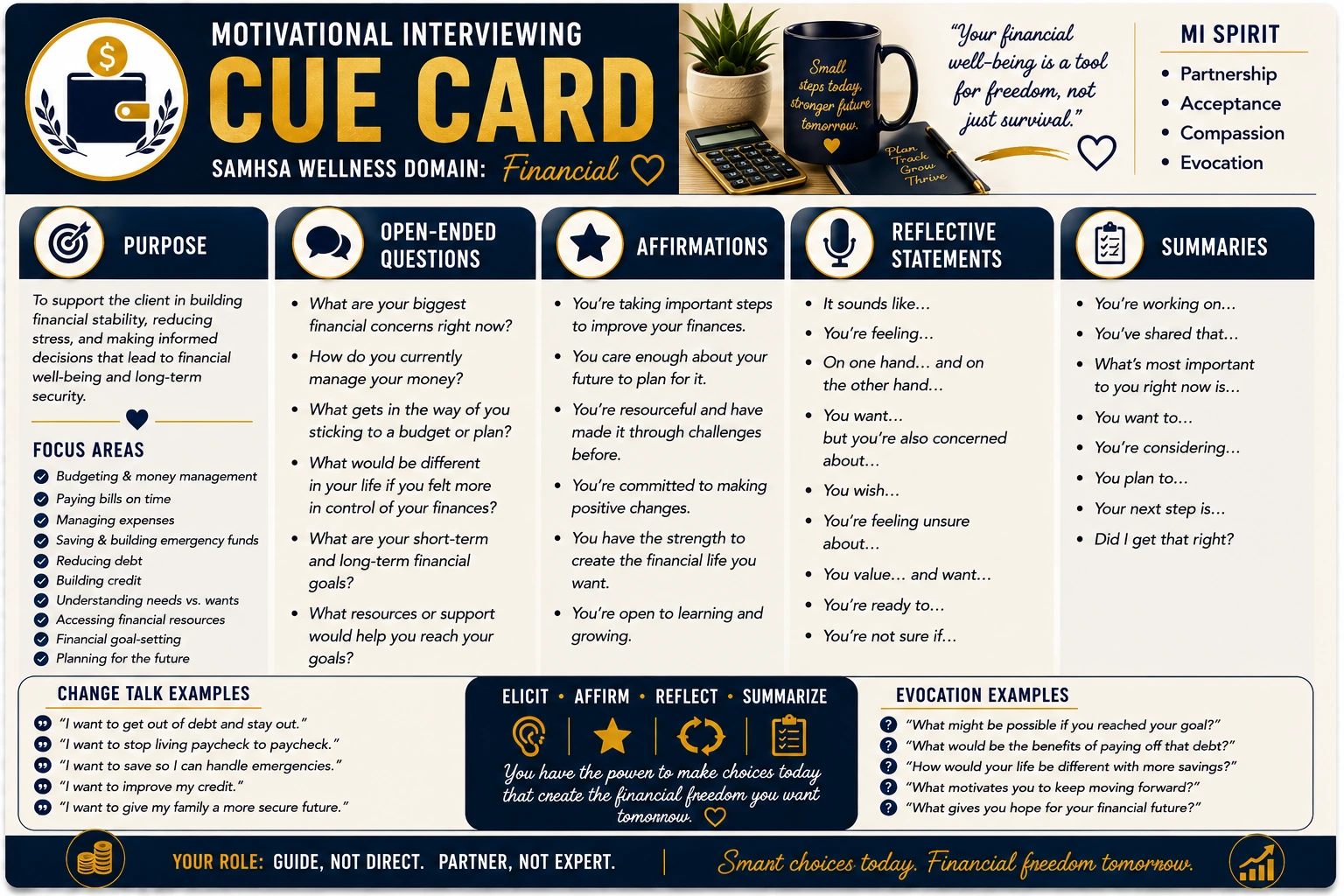
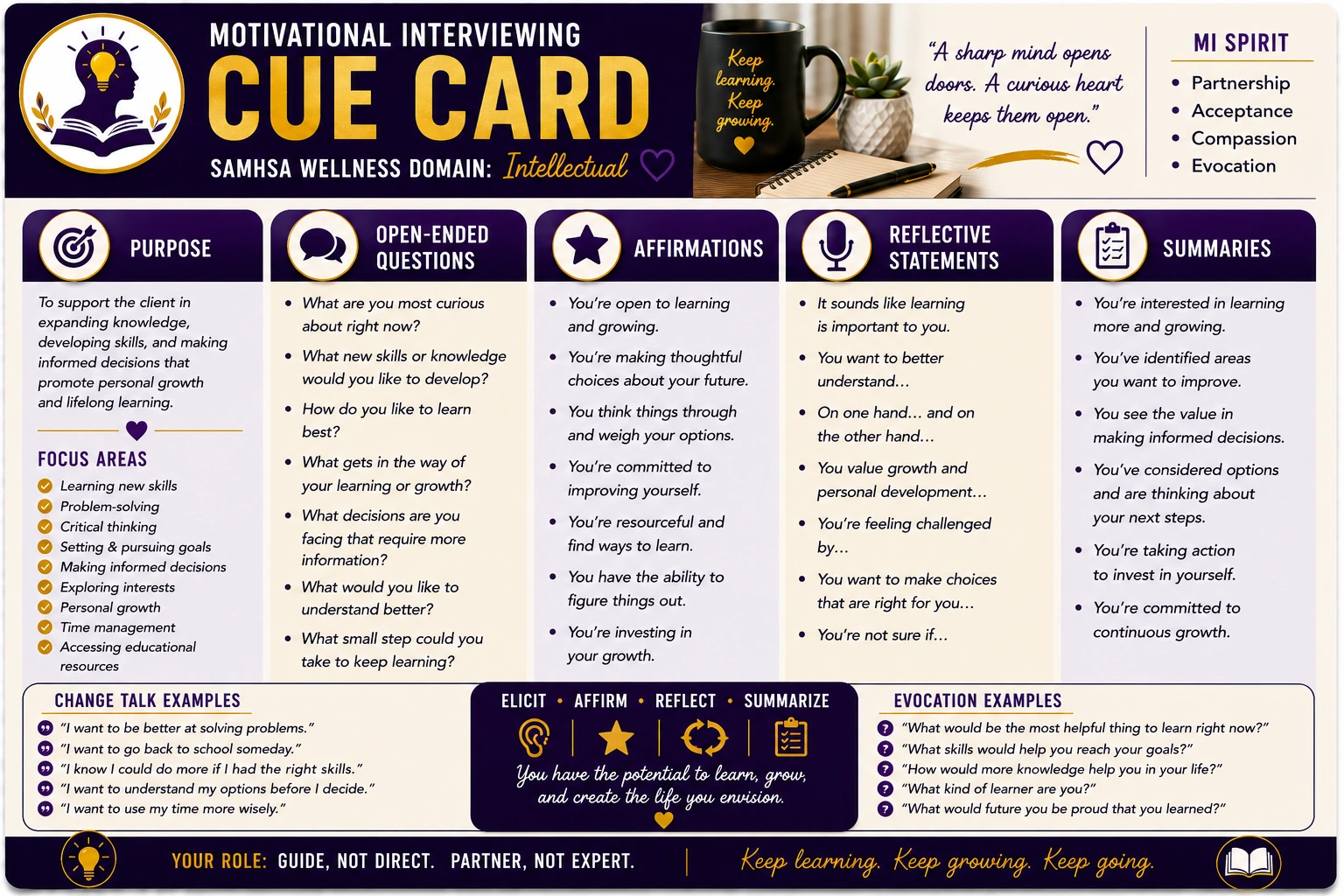
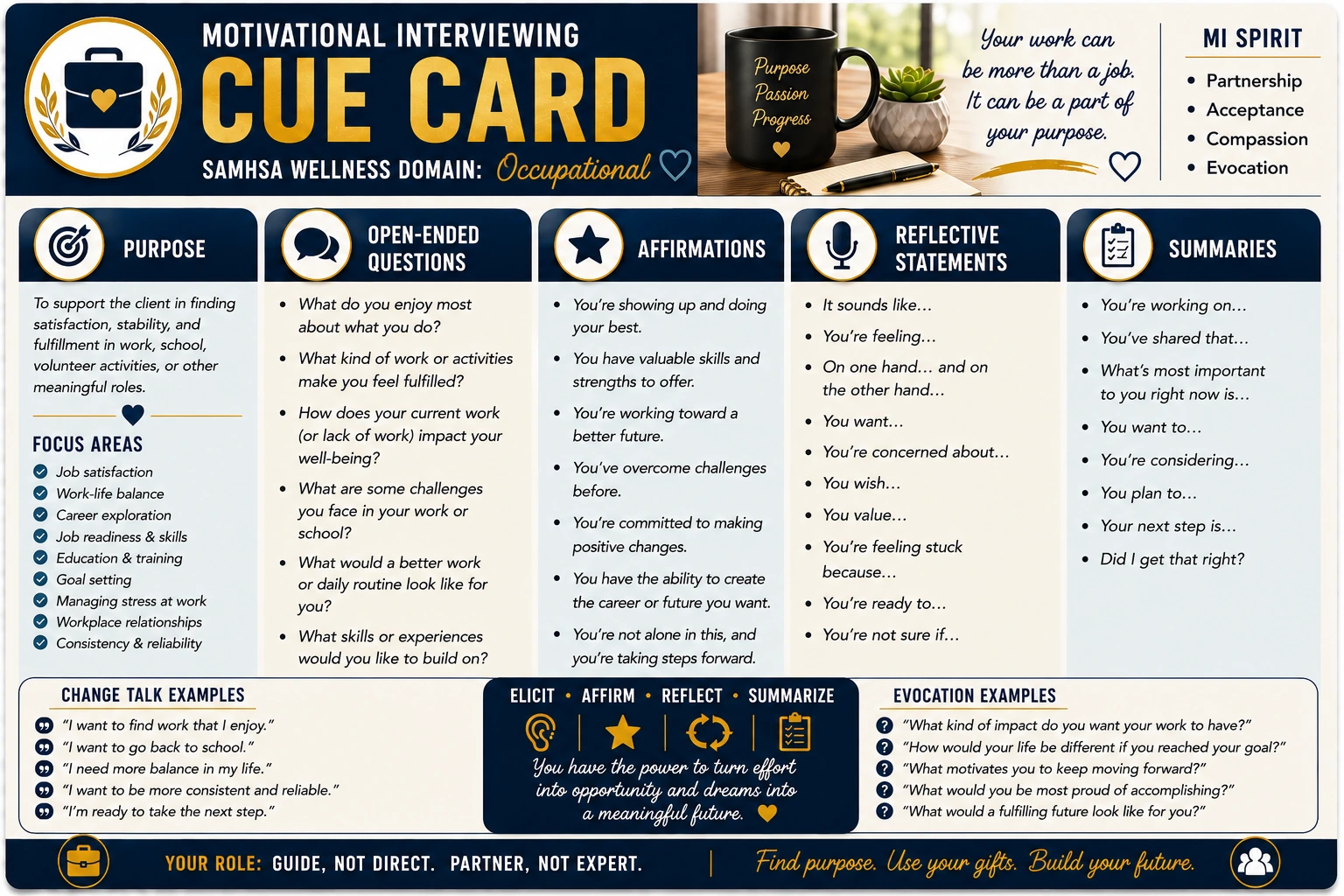
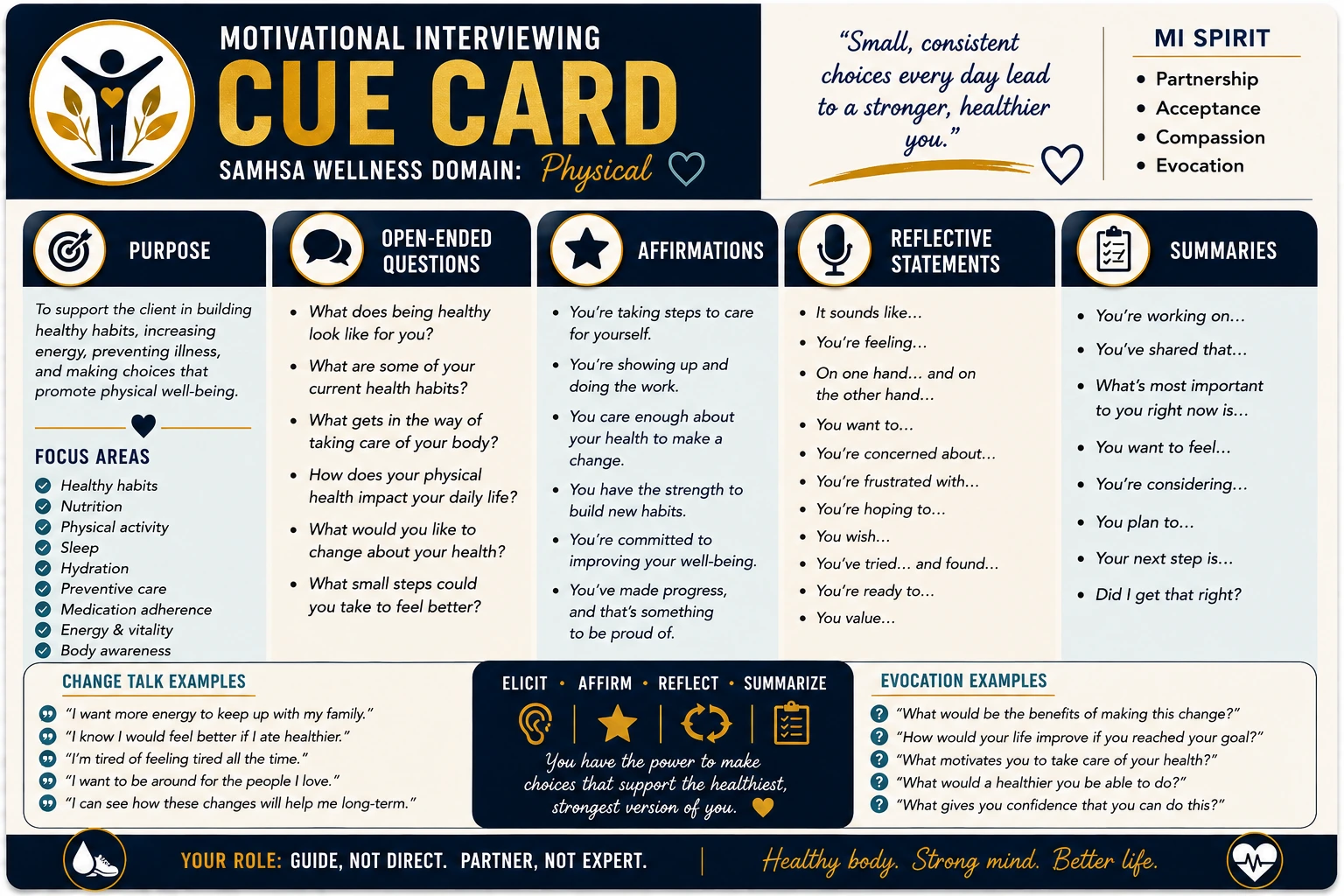
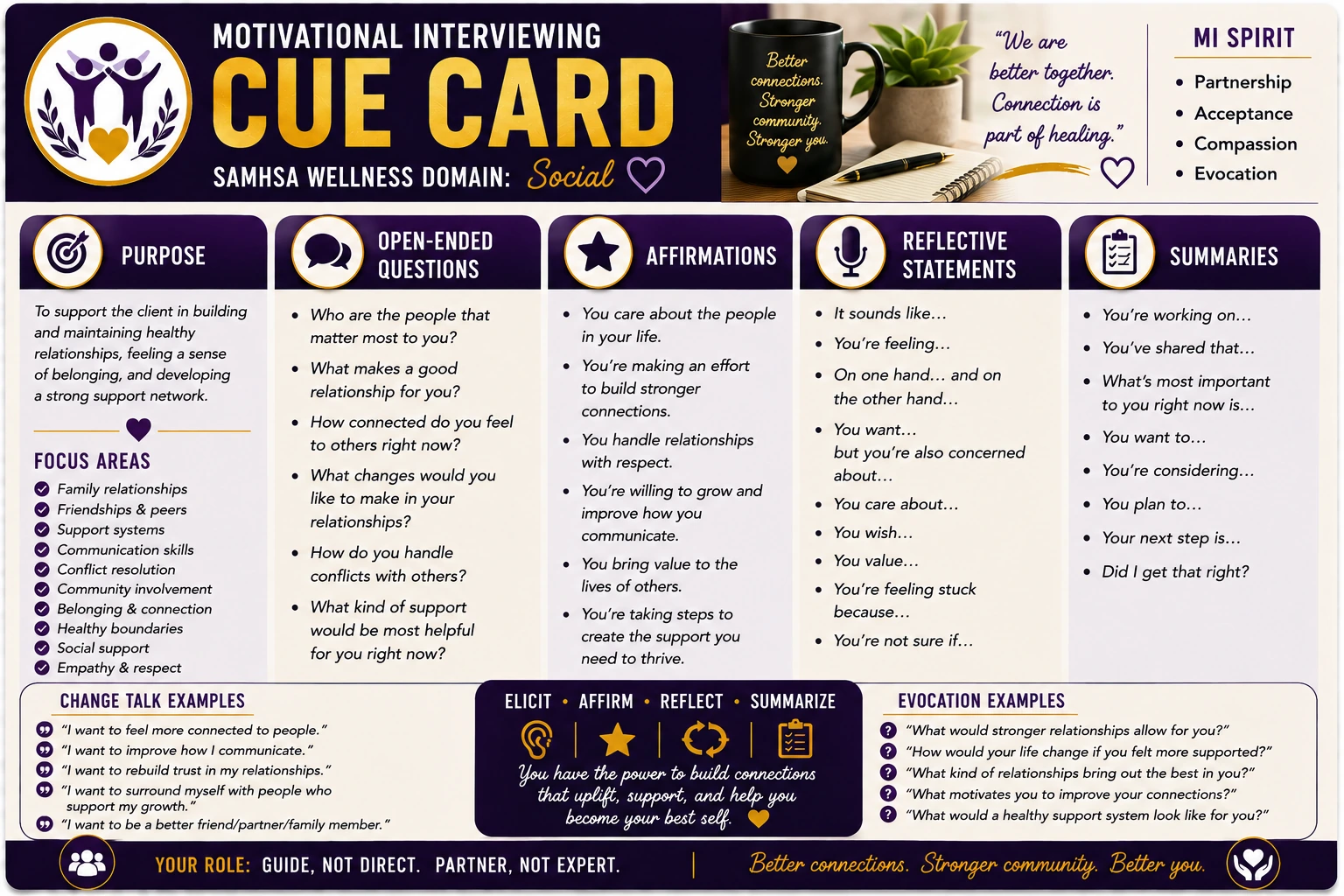
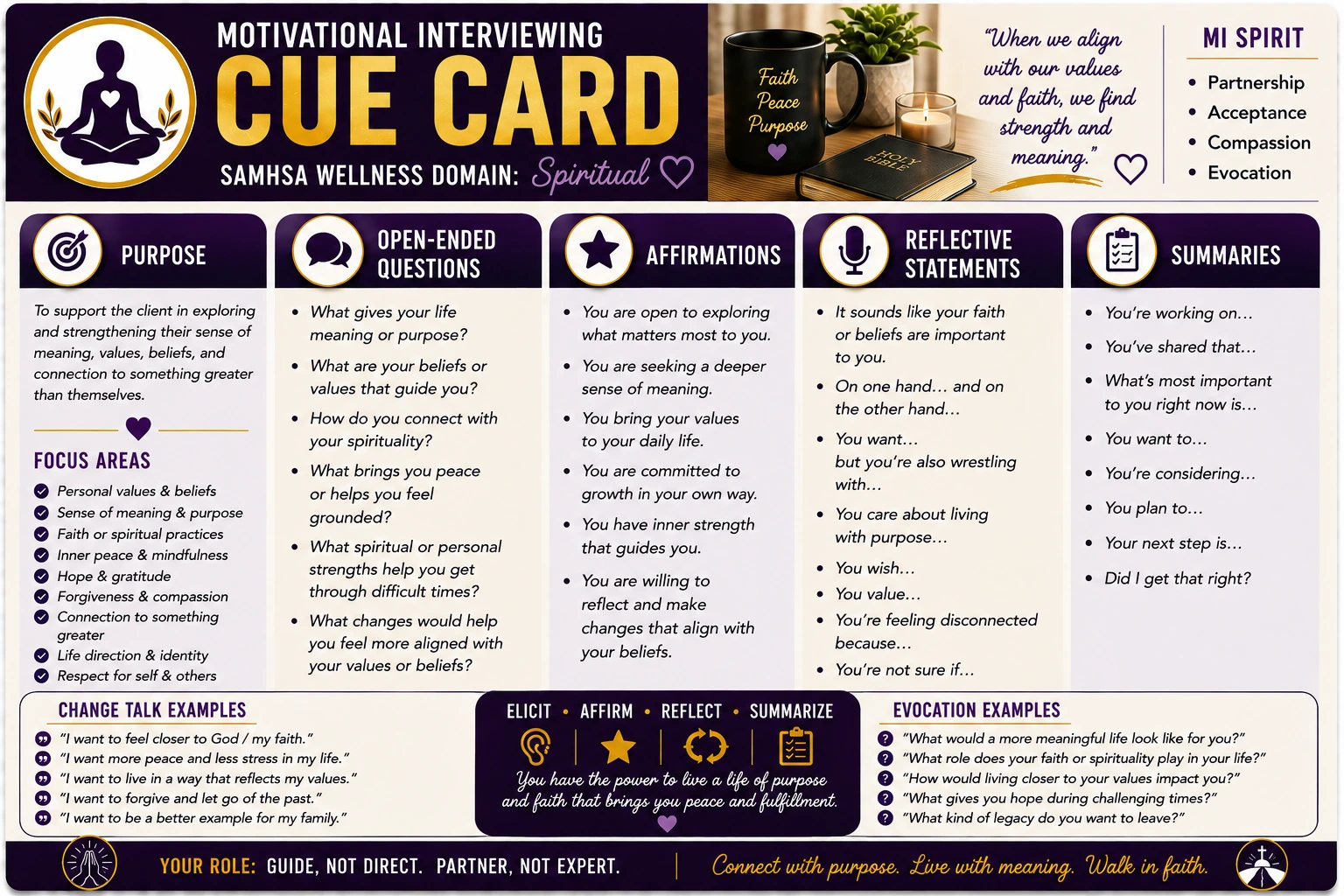
Motivational interviewing by wellness domain
Choose the participant’s wellness domain, then use the card to elicit, affirm, reflect, and summarize—without directing the participant’s answer.
Use open-ended questions, affirmations, reflections, summaries, and change-talk prompts for emotional wellness.
Download ↓Elicit the participant’s own reasons and ideas for creating a safer, healthier, more supportive environment.
Download ↓Explore motivation, confidence, and participant-chosen next steps related to financial wellness.
Download ↓Evoke curiosity, learning goals, strengths, and personally meaningful reasons for growth.
Download ↓Explore work, school, purpose, readiness, and the participant’s own vision for meaningful activity.
Download ↓Elicit personally meaningful reasons for healthier routines and realistic participant-selected steps.
Download ↓Explore connection, support, communication, belonging, and relationship change talk.
Download ↓Explore values, meaning, faith, hope, purpose, and participant-directed spiritual wellness goals.
Download ↓Who are you meeting with?
When you feel stuck
Move the session forward by choosing one active practitioner behavior.
“Discussed” or “processed” may describe conversation, but should not be the only evidence of the rehabilitative intervention.